How to Find a Water Leak
The clue most owners catch first is a bill that climbs though their habits have not changed, and it usually means water is going somewhere it should not. Working out how to find a water leak takes one afternoon and no gear beyond a phone camera. A licensed plumber confirms anything you turn up.
If we're late, $100 comes off your bill

- Licensed and InsuredEvery job done by a licensed plumber. QBCC No: 15024607
- Fixed Quote FirstFlat-rate pricing, agreed before any work starts
- Lifetime Labour WarrantyBacked by our Fix-It-or-It's-Free guarantee (T&Cs apply)
- $0 Call-Out FeesNo extra charge for nights, weekends or public holidays

Most homes across McDowall went up through the 1980s and 1990s over reactive clay. That shrinking and swelling ground works at buried pipe joints for decades, so hidden leaks are worth ruling out early rather than waiting for damage to show.
Start With a No-Use Meter Check
- 1

Switch everything off
Shut every tap inside and out, including the hose, the dishwasher, the washing machine, a plumbed-in fridge and any irrigation the yard runs.
- 2

Record the meter
Photograph the digits on the meter, red numbers included, because the red dials catch small flows the black numbers miss. Keep the tap at the meter itself open, or the test tells you nothing.
- 3
Wait, then read again
Check the meter again after a decent no-use window, such as a school run, a walk or an evening out. A changed reading with nothing running is your answer. One caution from the utility side: Urban Utilities does watch for unusually heavy use and gets in touch with customers where possible, but its own advice is not to depend on that. Reading your own meter is the reliable check.
Plumbing job in McDowall?
$0 call-out fees, available 24/7, and same-day where we can.
Room by Room Inside the House
Work indoors in this order: toilet cisterns first, then taps and showers, then plumbed-in appliances, then the walls, ceilings and floors themselves.
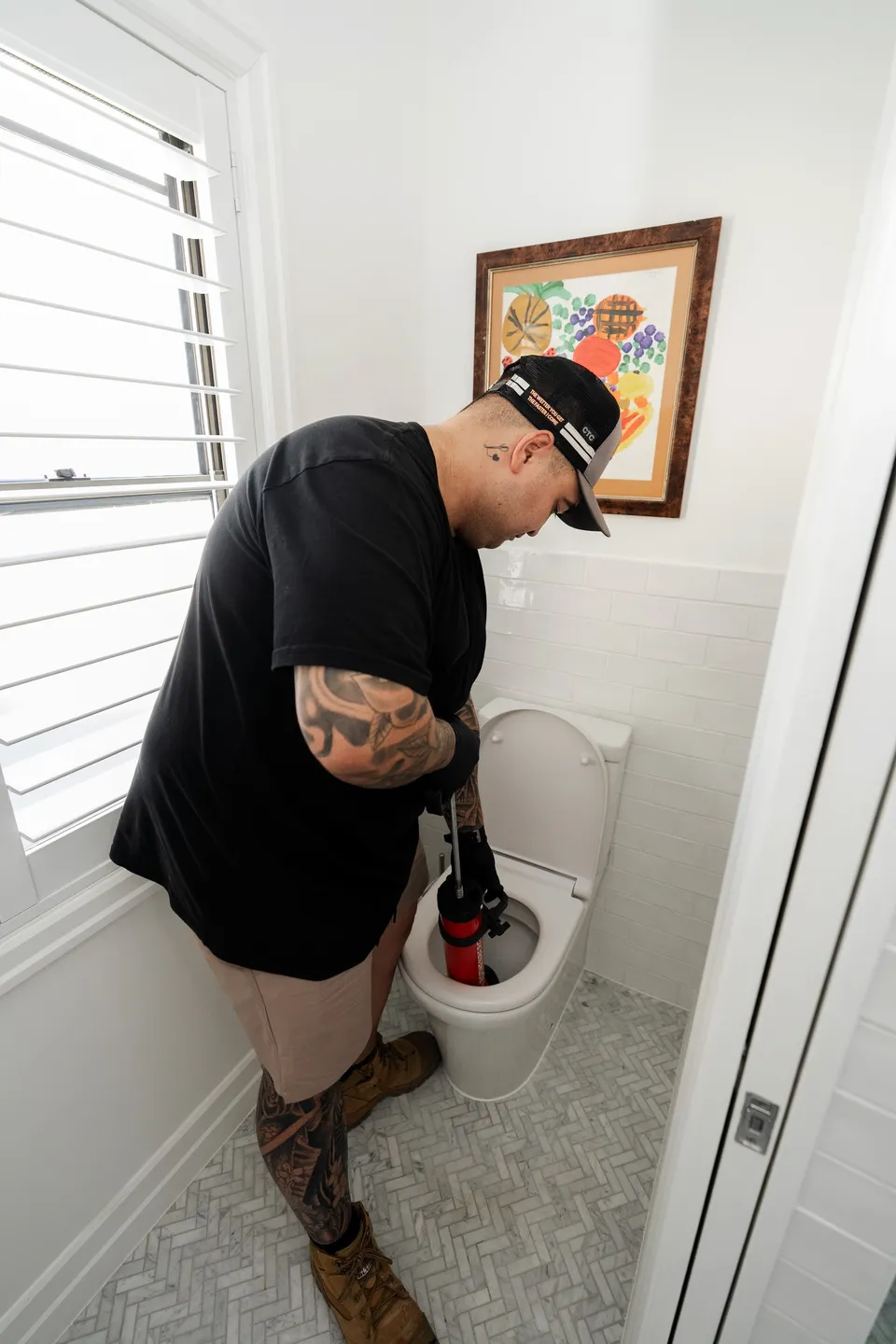
Toilets first
Drop a little food dye into the cistern and leave it, with nobody flushing. Colour drifting into the bowl within about half an hour tells you the cistern is leaking.
Then the fixtures
Confirm every tap and shower is fully off and not dripping, and look over the plumbed-in fridge and the hot water system for any weeping joint or tray overflow.
Then the surfaces
Brick-veneer walls along De Mille Street and its neighbours hide a slow drip well. Hunt for damp or stained plaster, a musty smell, and paint swollen or peeling. A floor spot that feels warm underfoot is another tell, and any of those signs in one place points to water travelling from another.
Garden Taps, Tanks and Other Water Users
Outdoors, check three things: the garden tap and its hose fitting, any rainwater tank, and the state of the ground itself.
Hose taps
A slow drip at a garden tap wastes a startling volume across a season, and a worn hose fitting does the same. Run a thumb around each connection while the tap is on and off.
The tank
If a rainwater tank is plumbed to town water, confirm it is not topping itself up from the mains without you noticing. The culprit is often a failed solenoid or worn internal part, which a licensed plumber checks and replaces.
The ground
Soggy lawn, a patch greener than everything around it, spongy soil and paving lifted out of line all point to a leak under the surface. In yards near the creek reserves, compare any suspicious patch against how the rest of the lawn behaved after the last rain.
The pool, if there is one
Stand a bucket filled from the pool on the top step, level inside and out, and scratch a mark at each waterline. Leave the pool alone for a day: if the pool has fallen further than the bucket, water is going somewhere besides evaporation.
Meter Moving but Nothing Found
Two findings close the hunt. A leak located at a fixture explains the movement.
A meter still ticking with nothing found tells you the water is escaping where you cannot see it, under the ground, under a driveway or inside a wall. A leak like that can run day and night and stay unnoticed until the damage or the account balance gives it away.
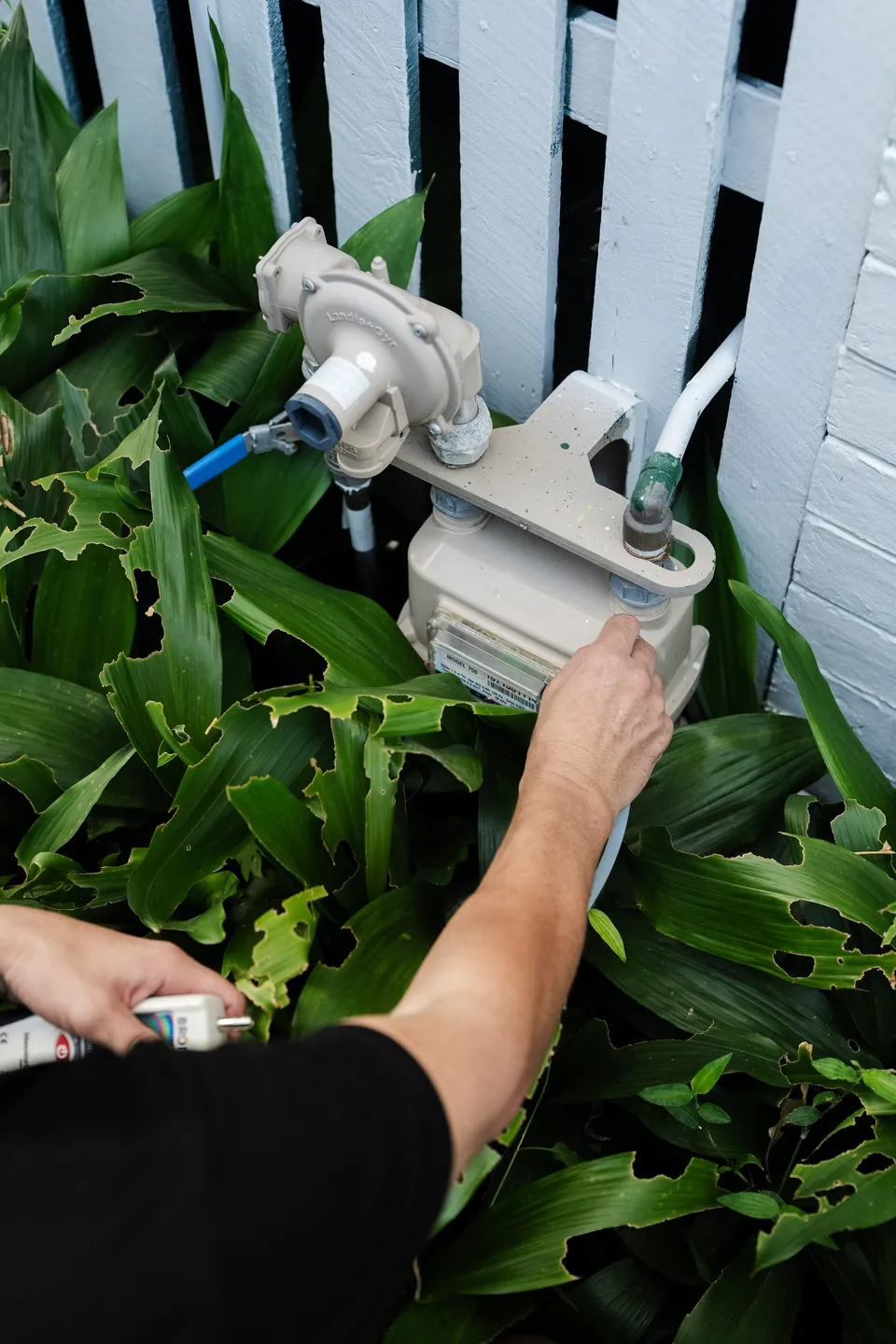
Everything from the meter onto the property is yours to maintain, and fixing a burst or broken pipe is minor work in Queensland, so a licensed plumber carries out the repair without a permit. How the water is traced to its exact point, and what the result means for your bill, is covered on the leak detection page.
When to Call a Plumber
Call once the meter keeps moving after your hunt, because that means water is leaving the system behind a finished surface. A warm floor patch, a wall stain that returns after drying, or a soggy strip of lawn that never dries out all earn a phone call the same week.
McDowall's storm season from November to March soaks lawns for other reasons, so a green patch that persists through a dry stretch is the telling one. A licensed plumber traces the faulty stretch, isolates it, pressure-tests it and gives you a fixed quote before any repair starts.
Questions McDowall Owners Ask About Leaks
Call (07) 3523 7121How long should I leave the meter before checking it again?
Give it at least one hour with nothing in the house drawing water, then read the meter again. What counts as fully switched off depends on how many appliances are plumbed in. Numbers that change over that quiet stretch tell you water is getting out somewhere on the property, and a licensed plumber confirms where.
Where will I find the water meter at my McDowall place?
Your meter sits in a small lidded box in the ground, flush with the surface, on the strip between the road and your front boundary. Lift the lid and you will see the numbers, with a row of red digits among them. Photograph all of them before the test starts.
Could a leak hide under the slab of my McDowall home?
Yes, a concealed leak can sit beneath a slab, below paving or within a wall cavity. Reactive clay under this suburb swells and shrinks with the seasons, and that ground movement can shift a buried line until a joint weeps. The meter check catches it even when nothing is visible.
Can I repair a hidden leak myself?
No, a hidden leak is a job for a licensed plumber, because fixing a broken pipe is minor work in Queensland that a licensee must do. The only owner-friendly tasks are on the QBCC's unregulated list: tap washers, cistern rubbers, shower heads and filter cartridges.

Ring Us Once the Meter MovesWe'll call you back.
Book on (07) 3523 7121 for plumbing anywhere in McDowall. We're available 24/7, there's no extra charge for nights, weekends or public holidays, and every job comes with $0 call-out fees.
To claim your $0 call-out fee, call (07) 3523 7121 today.